We are part of —
 🔍
 🔍
 🔍
 🔍
 🔍
 🔍
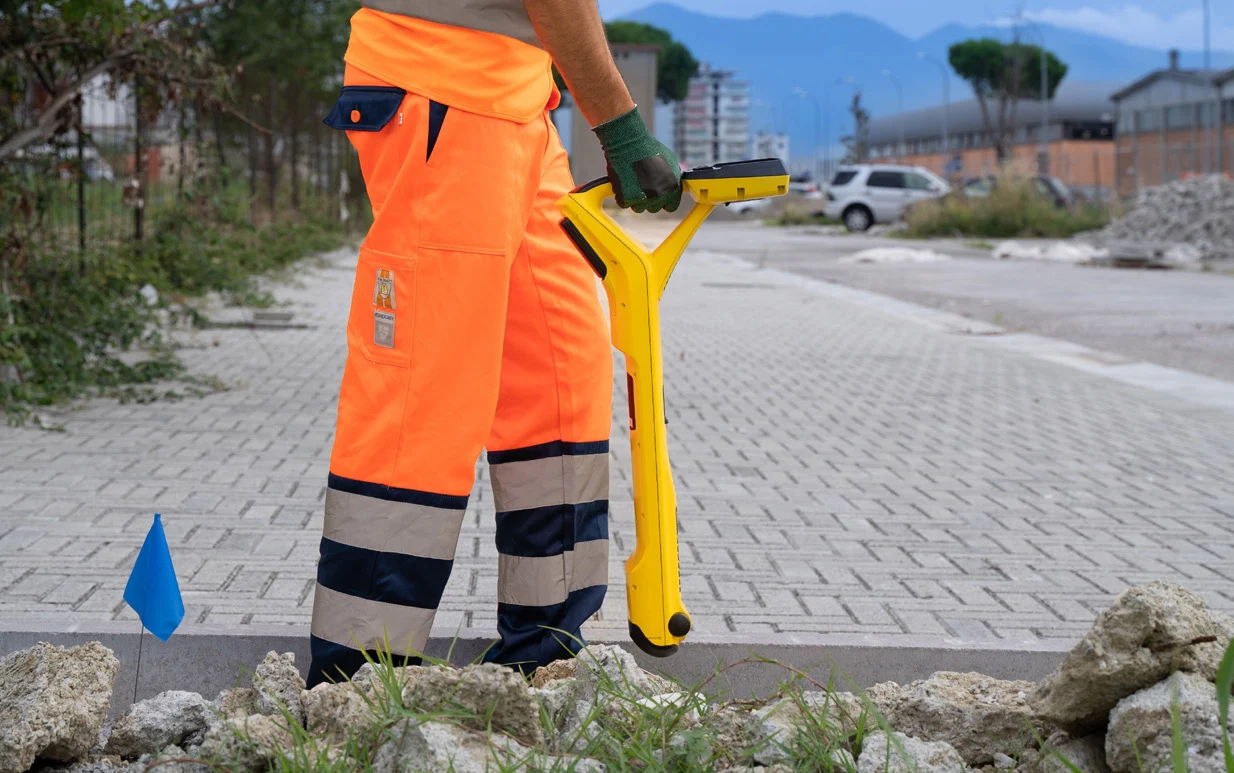
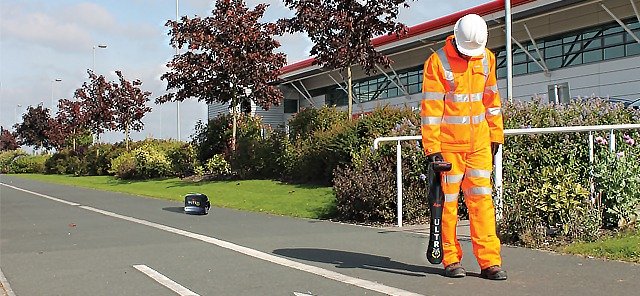
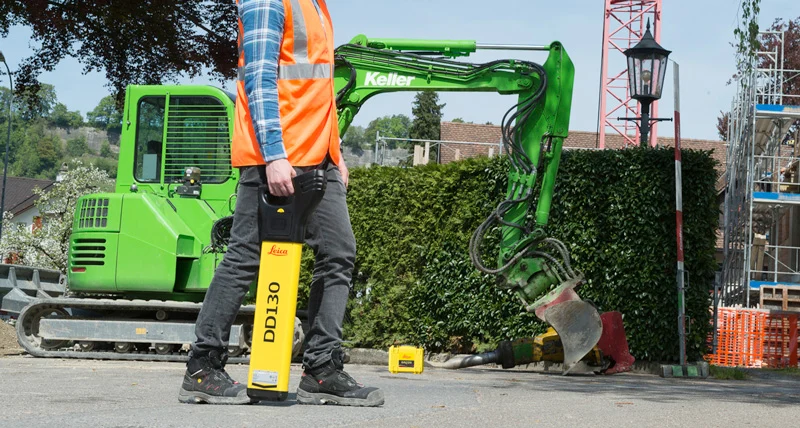
Leica Ultra and DT100 cable and pipe locator training — 1 day
1 170 €Net price: 951 €
Net price: 951 €
One-day practical training for owners of equipment bought outside GeoScanners: Leica Ultra, DT100, DD120 and DD175, transmitters, sondes, clamps and Trace Rod. Programme, participants, date and travel are agreed before ordering.
Ready to buy this product?
The price covers one training day. Travel is quoted individually before ordering; the group size is agreed with you.
Arrange the date and travel costWhy choose us?
- Over a decade of experience
- Professional training
- We work throughout the EU
- Professional after-sales support
- We offer premium products
The signal is the starting point. Correct interpretation makes the difference.
A signal on the screen is only the beginning. Establish where it comes from, whether it follows the intended installation and when verification is needed. GeoScanners training connects locator operation to field decisions: mode, signal application, frequency and measurement sequence.
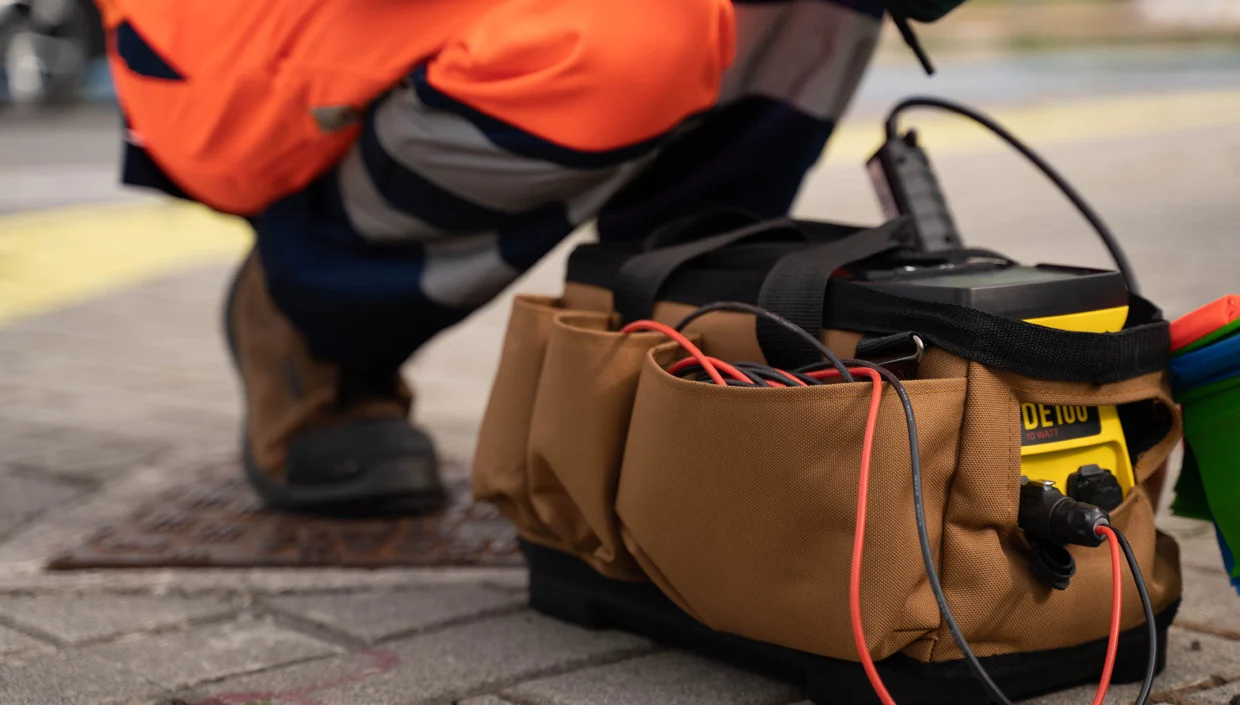
The main focus is Leica Ultra and DT100 precision locators. We can include the DD100 series, including DD120 and DD175, transmitters, induction clamps, sondes and active Trace Rod. Your team explores its own equipment and how different solutions suit different tasks.
This paid training offer is for individuals and companies who bought their equipment outside GeoScanners.
Download the brochure and product sheet
Explore the applications, equipment and key information in convenient PDF documents.
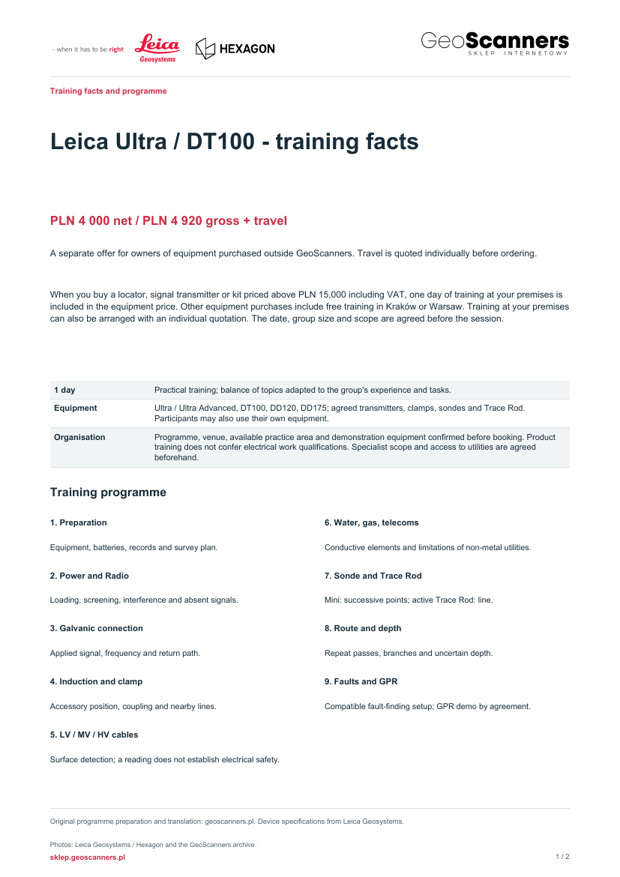
Training when buying equipment from GeoScanners
When you buy a locator, signal transmitter or kit priced above PLN 15,000 including VAT, one day of training at your premises is included in the equipment price.
Other equipment purchases include free training in Kraków or Warsaw. Training at your premises can also be arranged with an individual quotation. The date, group size and scope are agreed before the session.
Hands-on equipment practice
Work with agreed devices and examples matched to your company's tasks.
Choose the appropriate method
Learn when to use passive reception, a transmitter, clamp, sonde or active rod.
Assess the result's reliability
Check the route, signal behaviour and depth indication limits.
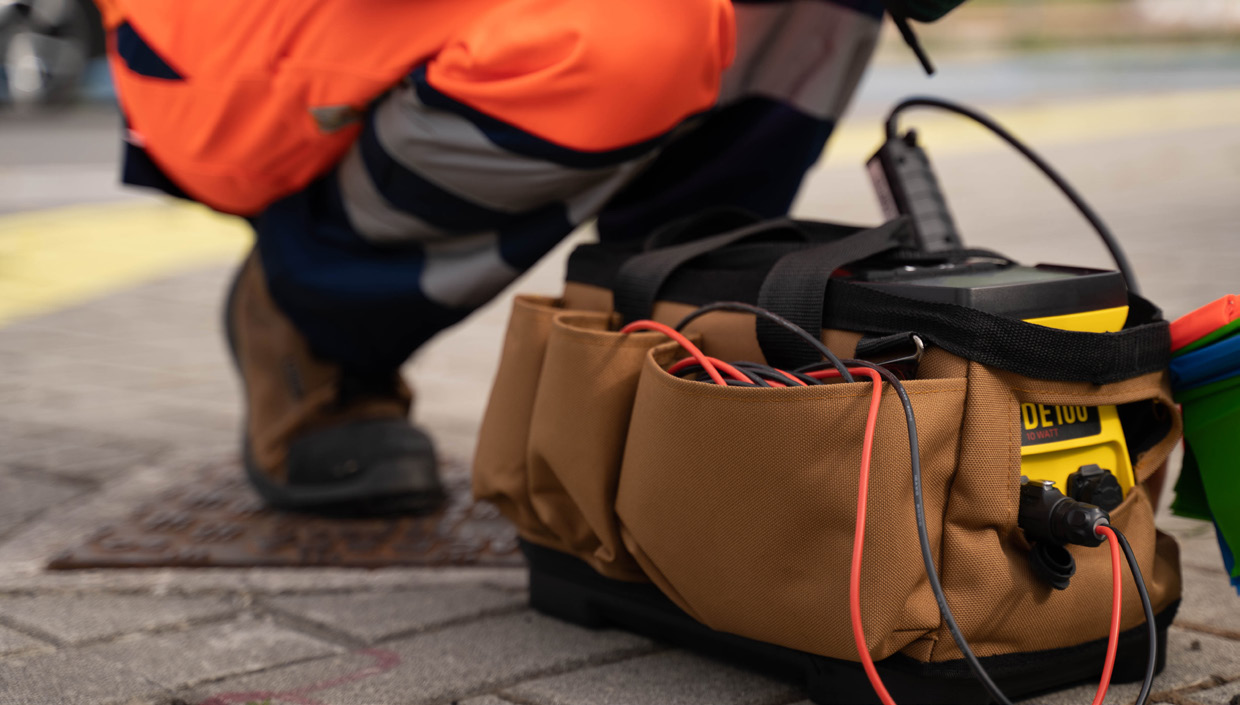
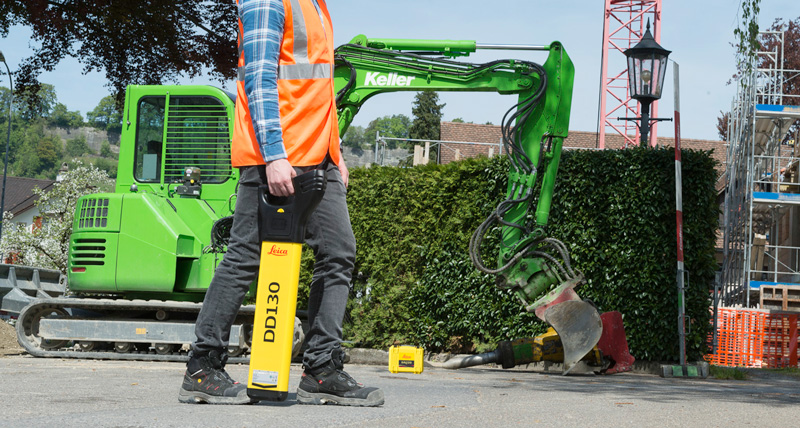
For people responsible for identifying buried installations
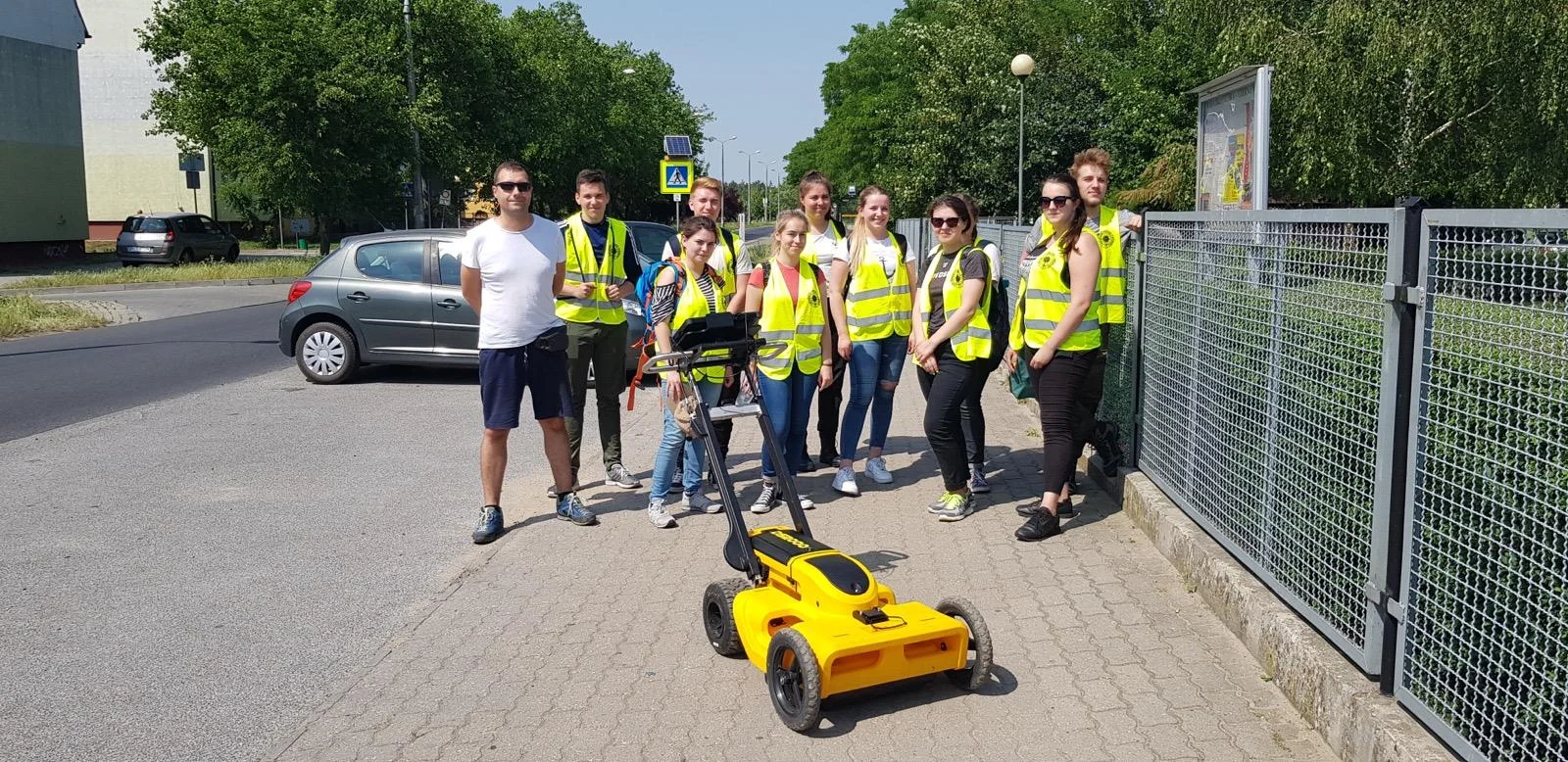
For excavation and installation contractors, network maintenance crews, surveyors, diagnostics specialists and people preparing pre-work surveys. Both new operators and experienced users wishing to improve work with transmitters, sondes and difficult signals can benefit.
Before meeting, we ask about installation types, models and typical problems. Exercises for sewer tracing differ from those for congested utility networks. Purchasing equipment from GeoScanners is not a condition of attendance.
Experience from surveys and field teaching
We know the equipment beyond the catalogue
GeoScanners combines equipment sales with field surveys, demonstrations and implementation. Michał Dąbrowski used surveying instruments in his doctoral research and field classes with Nicolaus Copernicus University students.
We focus on translating device operation into decisions for a specific task. We discuss your installations, use agreed equipment and leave time for questions from the team's everyday work.
Meet Michał and Tomasz →Programme: from site assessment to a justified result
These topics form a scope to agree for one day. The sequence and exercise balance depend on group experience, equipment and available installations. We do not promise equal practice time for every possible situation.
1. Preparing the locator and planning the survey
Check devices, accessories, power, receiver settings and site records. We distinguish locating one target from systematically surveying an area. Participants establish what information is needed before choosing a tracing method.
2. Passive Power and Radio — what they show and cannot confirm
Interpret signals without your own transmitter and understand why no response does not prove no cable or pipe is present. We examine loading, reception, shielding and interference, including clear signals from an adjacent line or an unexpected route.
3. Transmitter and direct, or galvanic, connection
Understand the transmitter's role in applying a known signal and choosing frequency. Direct and galvanic connection describe the same family of methods. Assess signal application, return paths and coupling to other services. Practice is limited to suitably prepared and approved training installations.
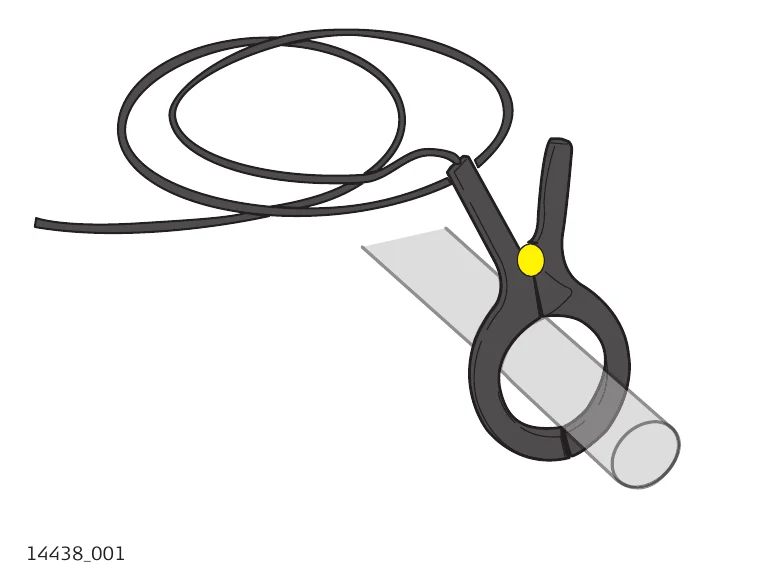
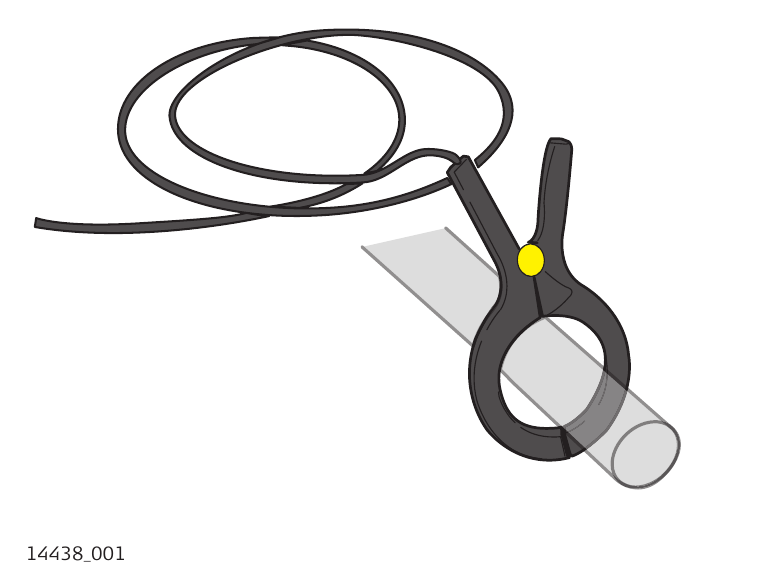
4. Induction and clamps — signal application without direct connection
Compare an inductively positioned transmitter with an induction clamp. Explore placement, access and signal separation in congested networks. Observe responses when signals couple to other lines and how to check consistency of interpretation.
5. Low-, medium- and high-voltage power cables
Discuss surface locating, mode selection and limits from cable construction, loading, layout and access to connection points. Voltage class alone does not guarantee detection. A locator response does not confirm a cable is disconnected or safe to touch. Access and electrical work follow the network owner's rules and participants' procedures.
6. Water, gas, telecommunications and nonmetallic installations
Consider metal pipes, conducting network elements and tracer wires alongside plastic pipes. Distinguish telecom cables with conducting elements from optical fibre alone. For PE, PVC and vitrified clay, discuss sondes and active rods requiring internal access. An electromagnetic locator does not independently identify every empty plastic pipe.
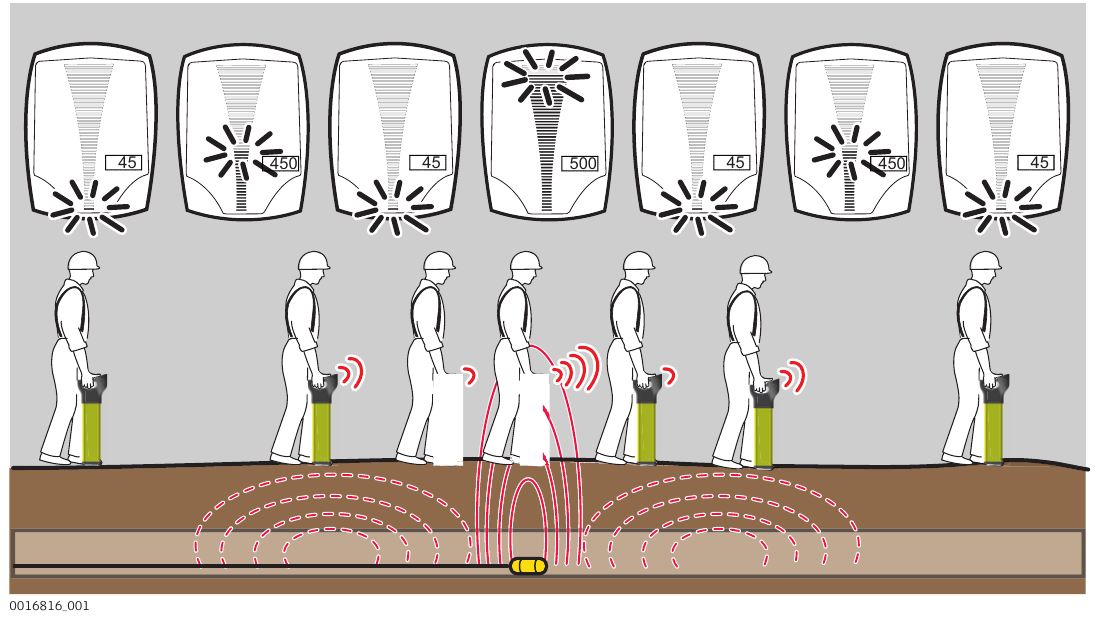
7. Sonde and Trace Rod — sonde points versus a continuous route
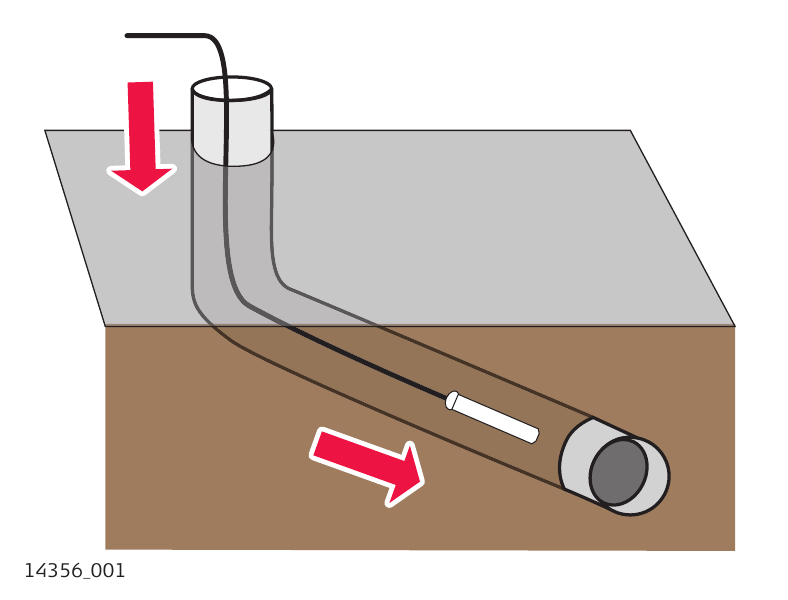
Recognise sonde signals, locate successive positions and mark points forming the accessible pipe route. Compare this with line tracing a transmitter-powered Trace Rod. Cover pipe access, insertion, length and site conditions. Reel length is not guaranteed reach or detection depth.
8. Checking routes, depths and interference
Examples show when to compare passes, approach from another direction or check another frequency. Distinguish the screen reading from a reliable depth estimate. Examine branches, parallel services and distorted fields. Finish by clearly marking the route and recording what is confirmed and what still needs verification.
9. Cable fault locating and GPR as a complementary method
Distinguish tracing a cable from finding sheath or insulation faults. Practical fault locating requires an agreed compatible system, such as a suitably equipped Leica Ultra Advanced with an A-frame fault probe. This is not a function of every DD locator or receiver/transmitter combination.
We can discuss when GPR can complement electromagnetic locating. A GPR demonstration and its scope require prior agreement. Full training in GPR acquisition and data interpretation is a separate offer.
Equipment we can work with
Use your own kit. By agreement, we can also bring selected GeoScanners devices to compare methods and operating differences.
Leica DT100
Leica DD175
DA175 transmitter
Mini Sonde 33
| Parameter | Value |
|---|---|
| Leica Ultra / Ultra Advanced | Precision locating; functions depend on the device version and accessories. |
| Leica DT100 | Receiver mode selection, signal interpretation and work with an agreed transmitter and accessories. |
| Leica DD120 and DD175 | Passive and active surveys; comparison of DD100 series capabilities. |
| Transmitters and induction clamps | Select a compatible kit, signal application and frequency. |
| Sondes and active Trace Rod | Sonde position locating and line tracing accessible nonmetallic pipes. |
| Ground penetrating radar | Complementary demonstration by agreement; full GPR training is separate. |
If the course should focus on a specific Ultra, DT100 or DD model, we agree it beforehand. We can bring Leica equipment; the one-day programme does not assume every device and module will be practised in full.
Compare three pipe tracing kits
Match the locating method to the task: a separate sonde identifies successive points, while an active Trace Rod supports line tracing. Both types of reeled equipment here are 80 m long.
| Comparison | DD175 + Mini + fibreglass rod | DT100 + Mini + fibreglass rod | DT100 + DA175 + Trace Rod |
|---|---|---|---|
| Working method | Point locating a separate Mini Sonde | Point locating a separate Mini Sonde | Line tracing an active Trace Rod |
| Receiver | Leica DD175 | Leica DT100 | Leica DT100 |
| Equipment inside the pipe | Mini Sonde 33 + 9 mm / 80 m fibreglass rod | Mini Sonde 33 + 9 mm / 80 m fibreglass rod | 4.5 mm / 80 m Trace Rod, energised by DA175 1 W |
| Configuration profile | Lowest entry cost of these three kits; more affordable receiver and robust 9 mm rod | Higher-class DT100 receiver with a separate sonde for checking successive points | Precision DT100 and economical DA175 for line tracing Trace Rod; no separate Mini Sonde |
| Typical tasks | Sewers, drainage and accessible industrial pipe runs | Sewers and drainage with advanced receiver interpretation tools | Accessible connections and smaller PE, PVC or vitrified clay pipes |
| Gross price | 3 430 € | 6 550 € | 7 390 € |
| Details | View the DD175 Mini Sonde kit | View the DT100 Mini Sonde kit | View the DT100 Trace Rod kit |
| Training after purchase | Free in Kraków or Warsaw; training at your premises quoted individually | One day of training at your premises included with the kit | One day of training at your premises included with the kit |
80 m is the length of equipment on the reel. Reach and depth depend on access, pipe diameter, bends and clearance, the sonde or rod, and signal conditions. PE, PVC or vitrified clay itself is not the signal source.
How we prepare your training
Discuss your tasks
Establish what your team locates, which equipment it has and where support is needed.
Agree the programme and site
Confirm participants, site access, exercises, demonstration equipment, date and travel cost.
A day working with equipment
Combine explanations, hands-on exercises and signal analysis. Questions relate to participants' actual tasks.
Plan the next steps
Review method selection and identify additional accessories or procedures that can solve specific problems.
| Parameter | Value |
|---|---|
| Duration | 1 day |
| Base price | 951 € net / 1 170 € gross |
| Travel | Individually quoted and confirmed before ordering |
| Participant numbers | To be agreed |
| Date and location | Individually agreed |
| Participants' equipment | You may use your own devices |
| GeoScanners equipment | Selected models and accessories by agreement |
| Programme | Adapted to group experience and installation types |
Included in the training price
- One day of cable and pipe locator training within the agreed scope.
- Programme preparation for the tasks, group level and agreed models.
- Method explanations and practical exercises on an accessible, prepared site.
- Discussion of your equipment, accessory selection and measurement interpretation.
To agree in advance
- Travel — individually quoted and confirmed before ordering.
- Equipment and accessory purchases.
- Full training in GPR surveys and data interpretation.
- Specialist exercises requiring extra equipment, infrastructure or site preparation — scope to agree beforehand.
Participant numbers, field conditions and equipment are confirmed before booking. Product training does not confer qualifications to work on electrical power equipment.
Choose equipment and training in one place
We sell locators, transmitters and pipe tracing accessories. We can compare devices and determine whether a receiver, transmitter kit, sonde kit or line-tracing Trace Rod system best suits your tasks.
Questions before training
Do I need my own locator?
No. We can agree to use GeoScanners demonstration equipment. Bring your own kit if available to practise its settings and everyday accessories. Models and equipment are confirmed before training.
Does training cover DD120 and DD175?
Yes, these models can be included. Ultra and DT100 precision locators are the main focus; we agree the programme balance to suit your group.
Will we learn to trace PE, PVC and sewer pipes?
We can practise sonde locating and active Trace Rod line tracing. Internal access is needed to insert the equipment. We also cover existing tracer wires and situations requiring another method.
Can a locator detect every power cable?
No. Capability depends on the signal, installation construction and condition, reception and method. Recognising limits and verifying results in more than one way are key parts of the course.
Can we learn cable fault locating?
We discuss the topic. Practical exercises require the right locator version, compatible transmitter and fault probe, and a prepared installation. Not all models and accessories support it; we confirm the setup before training.
Is GPR training included?
Full GPR training is separate. During this day, by prior agreement, we can demonstrate GPR's complementary role alongside an electromagnetic locator.
Can the whole team attend?
Yes. Participant numbers are agreed according to equipment and exercise organisation, so people can work with a device rather than only watch a demonstration.
How is the final price agreed?
The base is 951 € net / 1 170 € gross for one day. Travel is quoted separately. We agree the site, participants, programme and complete price before confirming the order.
When is training included with a kit?
When you buy a locator, signal transmitter or kit priced above PLN 15,000 including VAT, one day of training at your premises is included in the equipment price.
Other equipment purchases include free training in Kraków or Warsaw. Training at your premises can also be arranged with an individual quotation. The date, group size and scope are agreed before the session.
Talk to a GeoScanners adviser
Describe your installation and planned work. We will help select the equipment or training programme and agree the offer details.
Contact