We are part of —
 🔍
 🔍
 🔍
 🔍
 🔍
 🔍
 🔍
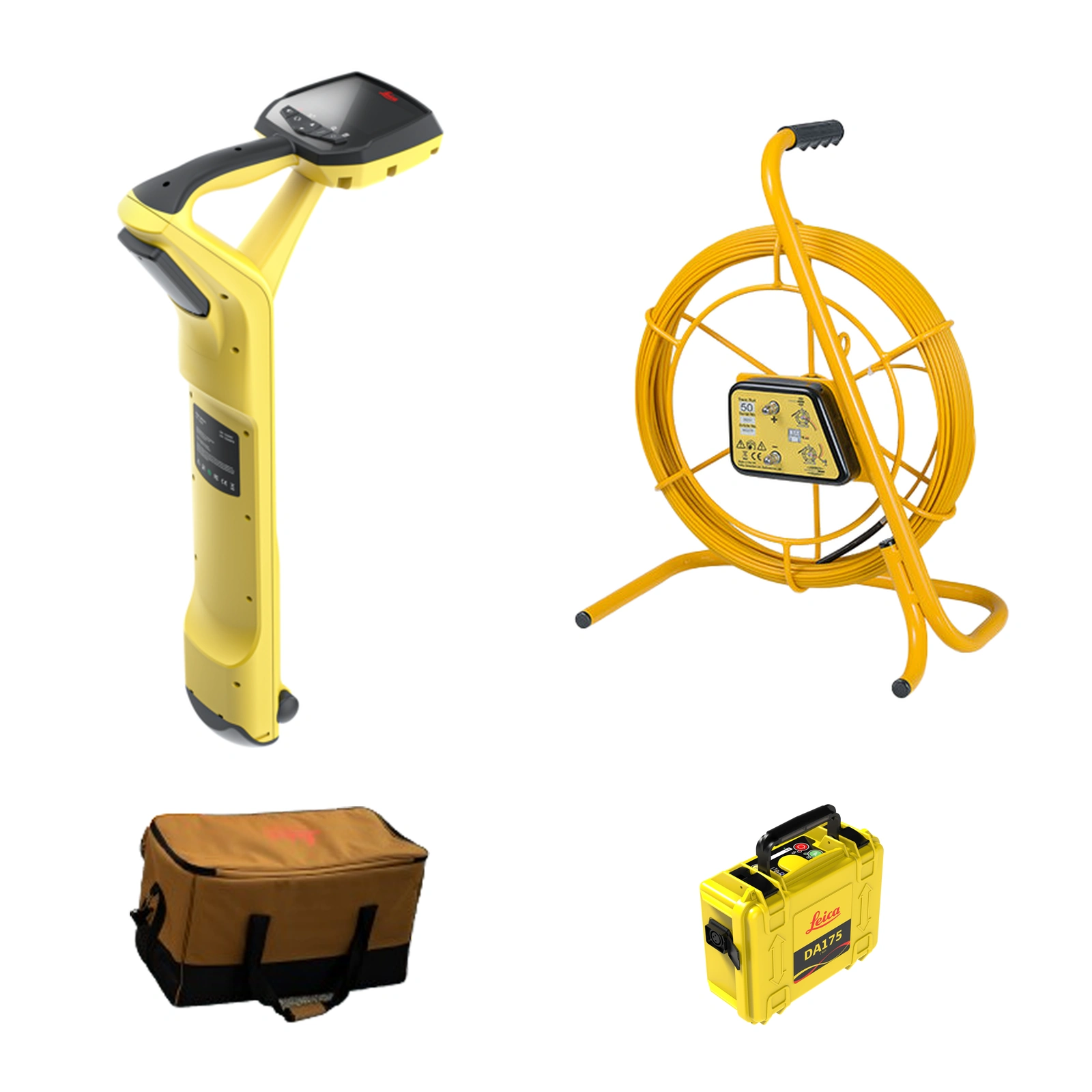
Leica DT100 + DA175 + Trace Rod 80 m kit for line tracing pipes
7 390 €Net price: 6 008 €
Net price: 6 008 €
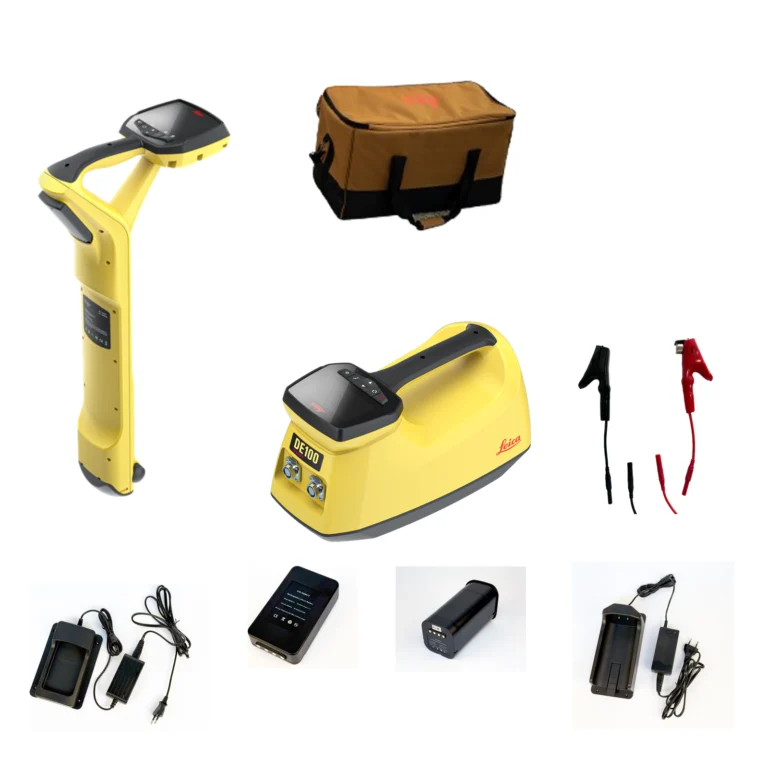
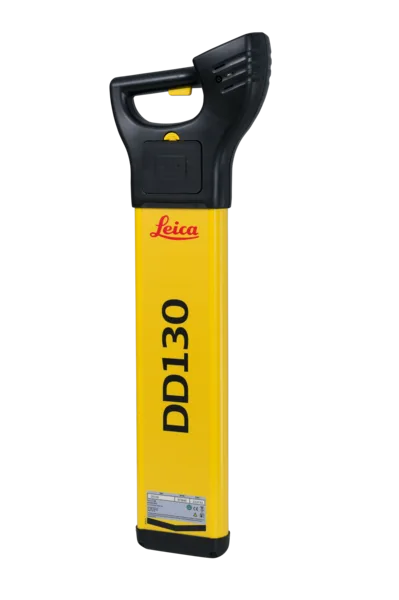
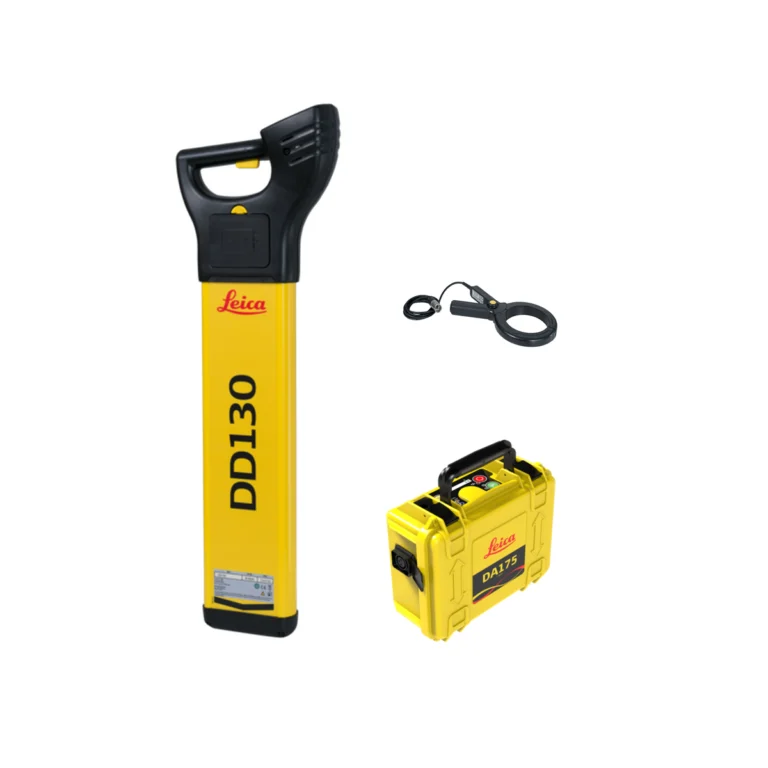
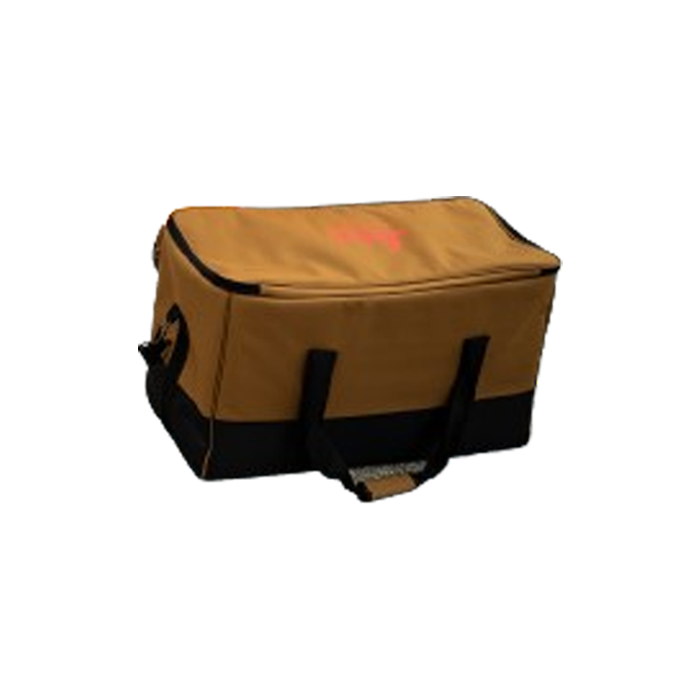
Precision DT100 receiver, DA175 1 W transmitter with connection leads and earth stake, 80 m Trace Rod and system bag. A system for line tracing accessible PE, PVC and vitrified clay pipes.
Free courier delivery in Poland We deliver locators and accessories by courier within Poland at no extra charge. International delivery is agreed individually before ordering.
Ready to buy this product?
Why choose us?
- Over a decade of experience
- Professional training
- We work throughout the EU
- Professional after-sales support
- We offer premium products
A precision receiver with an economical signal source
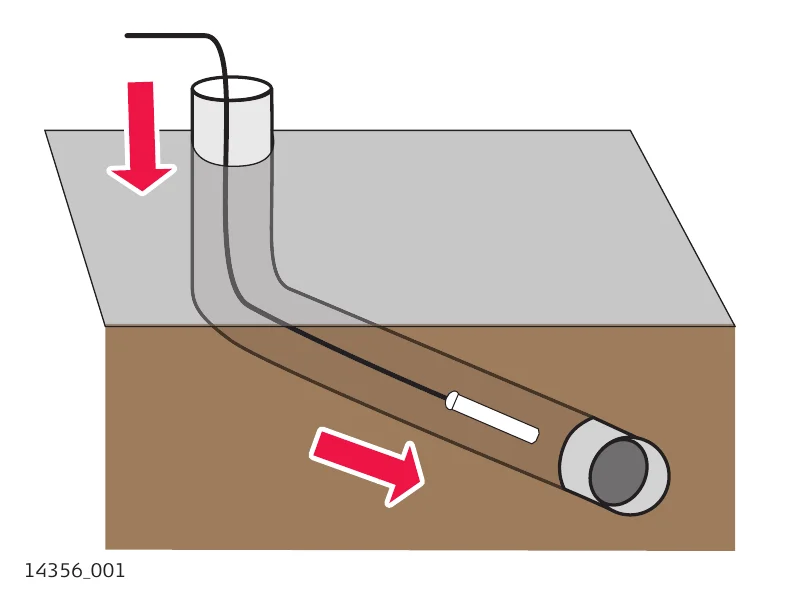
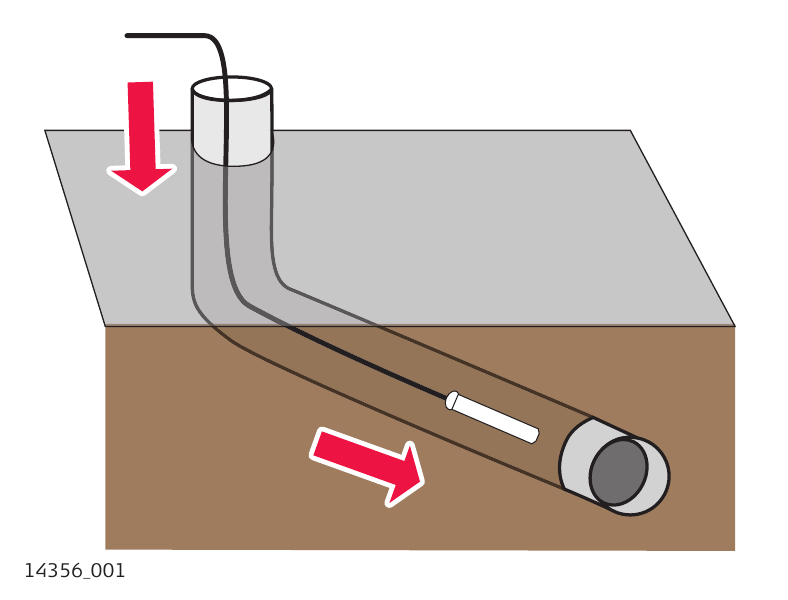
An electromagnetic receiver does not follow the wall of a PE, PVC or vitrified clay pipe. It needs a conducting element carrying a recognisable signal. In this configuration, an active Trace Rod is inserted into the accessible pipe and energised by the DA175 for line tracing.
The kit pairs Leica DT100 with a DA175 transmitter rated up to 1 W. GeoScanners selected this configuration for a specific workflow: invest in an advanced precision receiver and use a more affordable transmitter instead of the DE100. DT100 and DA175 share nominal 8 and 33 kHz frequencies; we match the setup to the active rod.
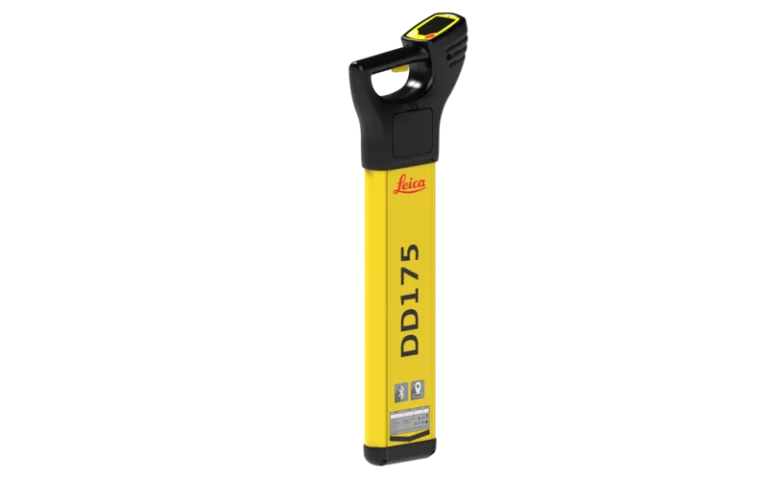
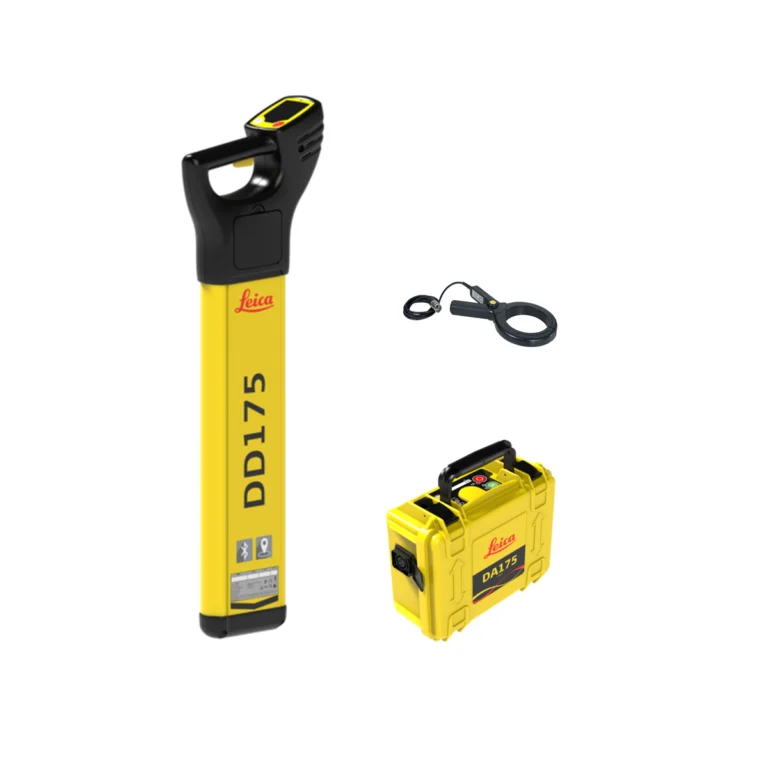
Especially practical for accessible service connections and typical shallower runs of smaller pipes. It traces the rod as a line rather than successive point locations of a separate Mini Sonde. For sonde position checks, choose the separate DD175 + Mini + fibreglass rod kit.
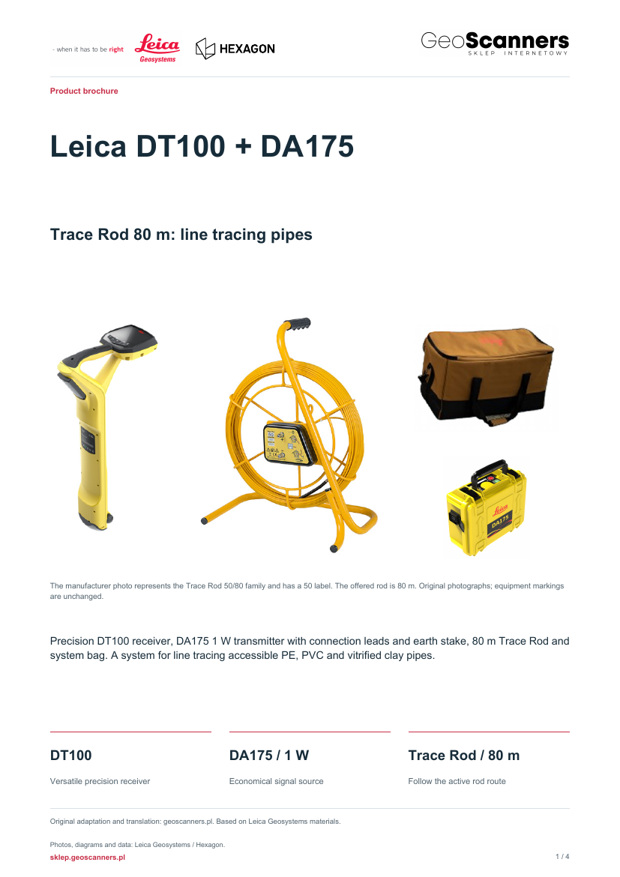
Download the brochure and product sheet
Explore the applications, equipment and key information in convenient PDF documents.
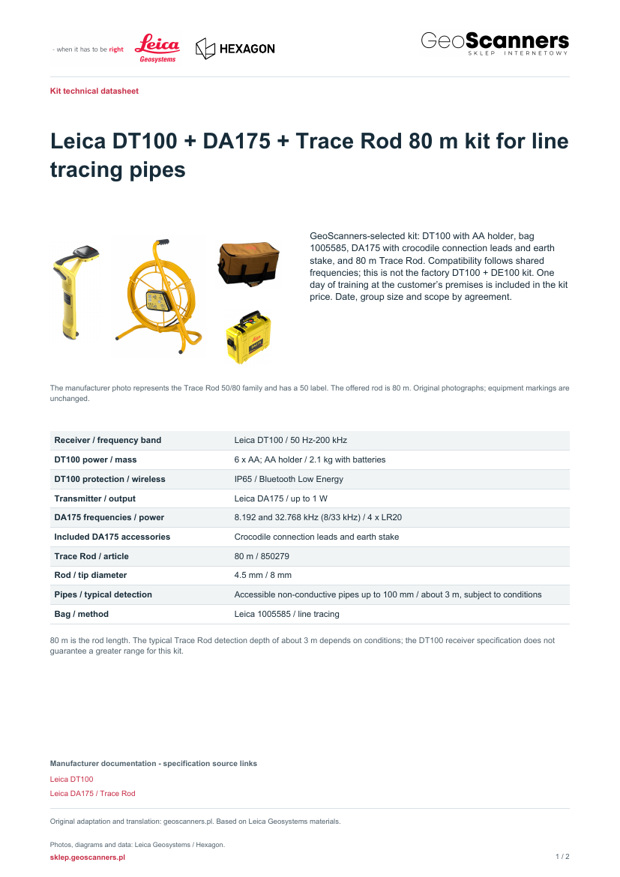
What is in the GeoScanners configuration?
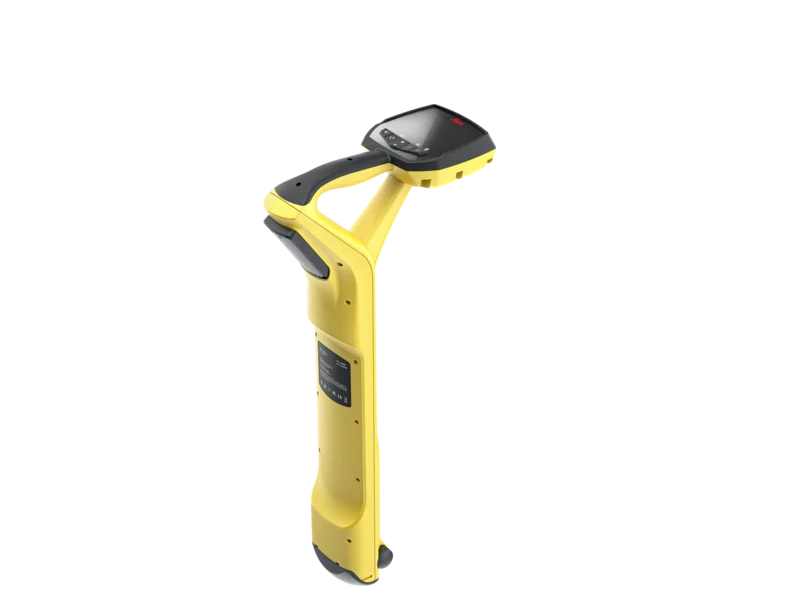
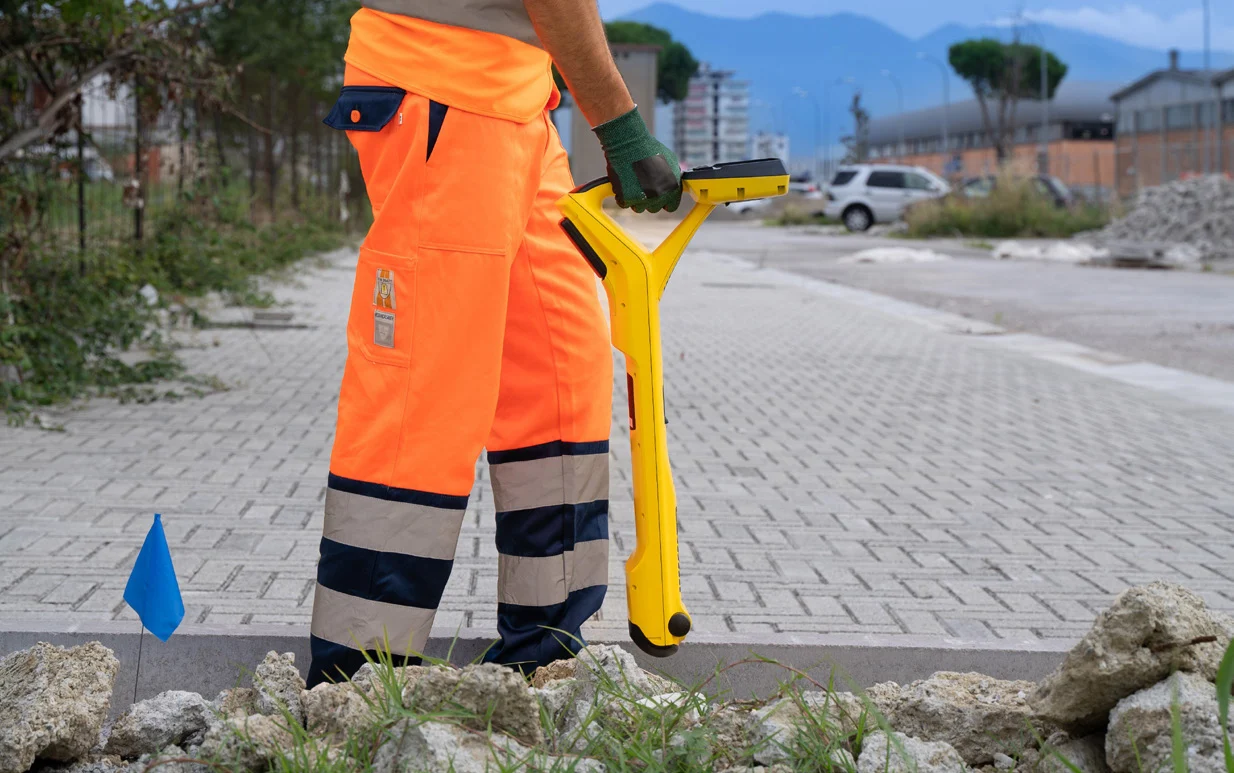
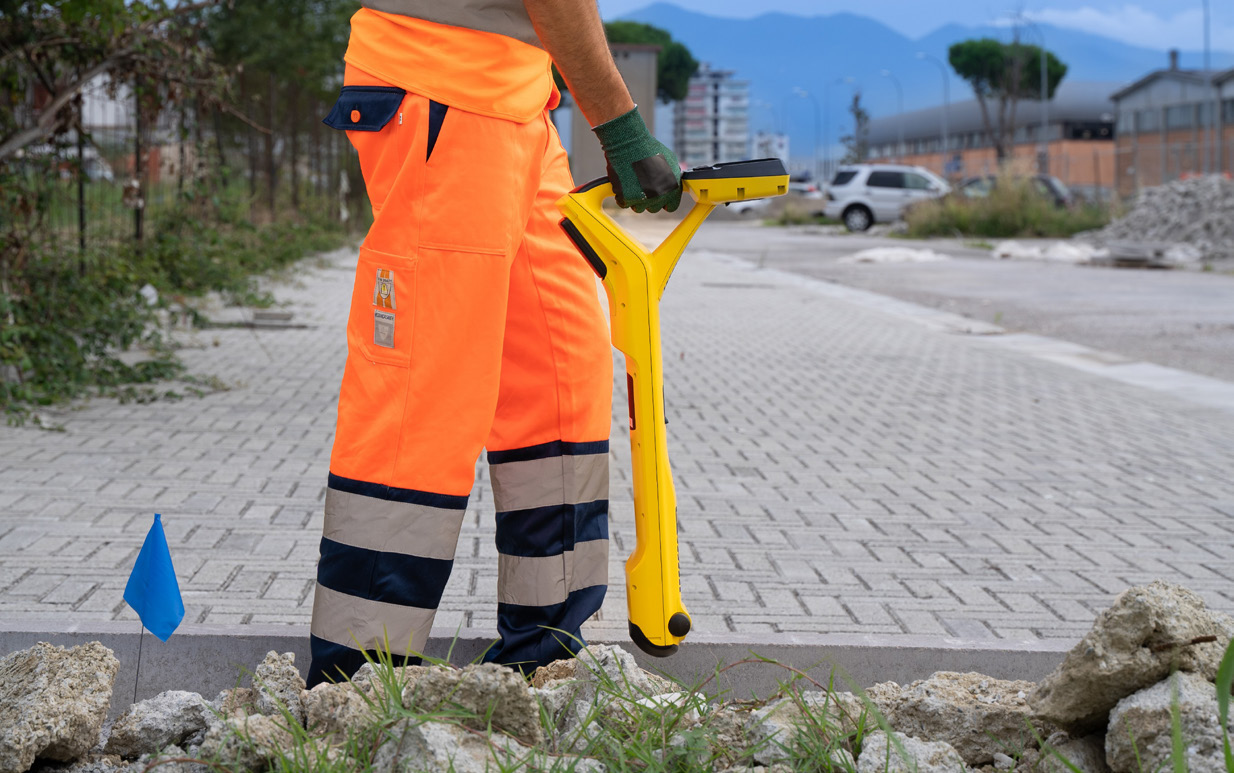
Leica DT100 locator
1 item4 900 €gross component priceLeica DT100 system carry bag
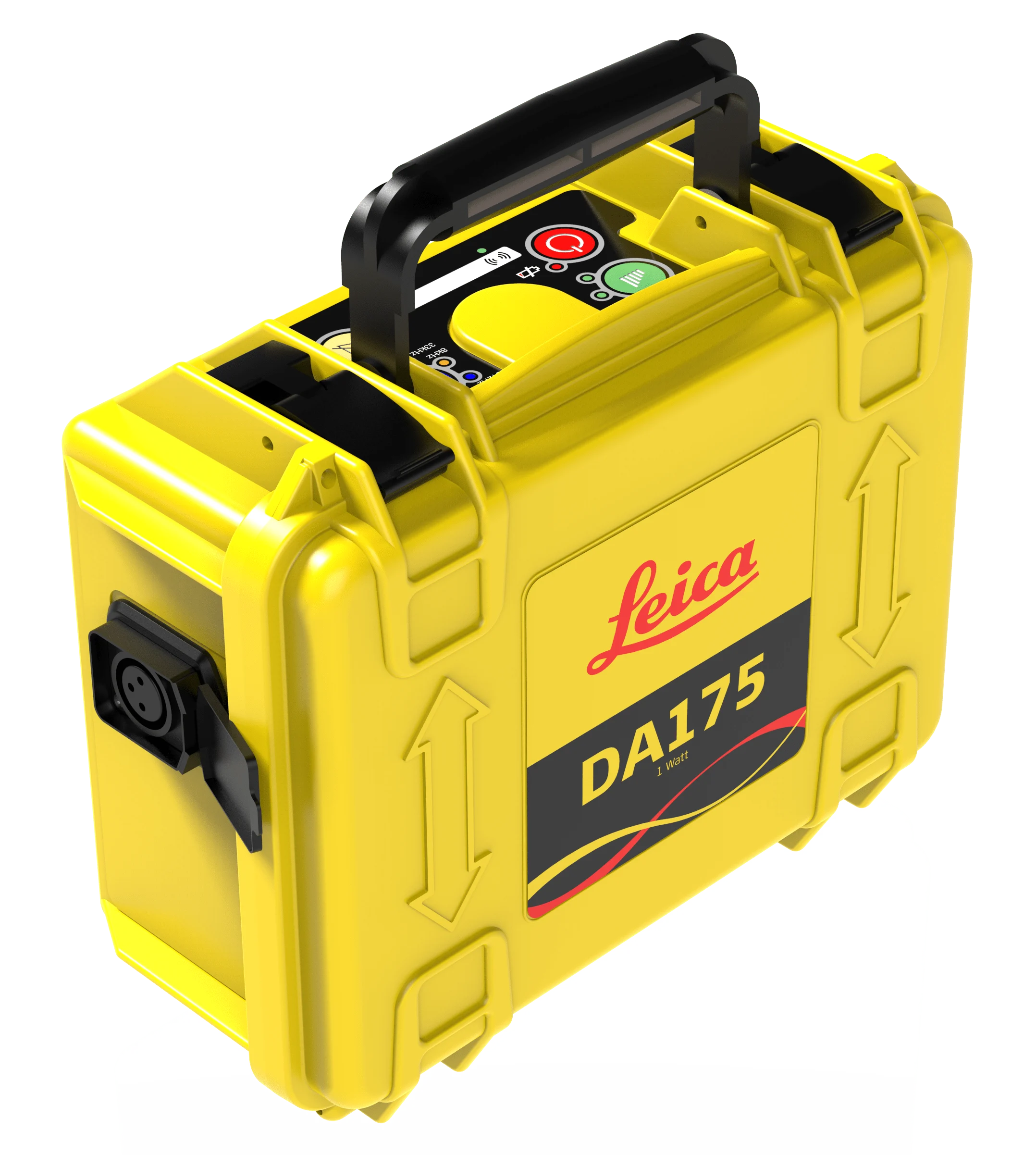
1 item220 €gross component priceLeica DA175 signal transmitter
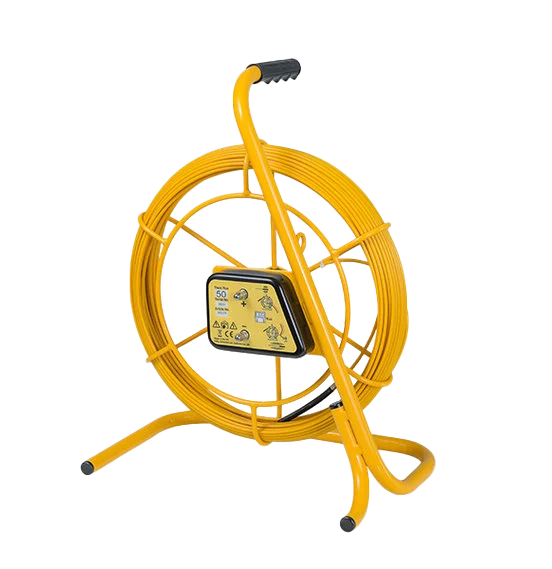
1 item1 190 €gross component priceTrace Rod 80
1 item1 070 €gross component priceThe price includes a DT100 receiver with AA holder, DT100 system bag, DA175 transmitter with crocodile-clip connection leads and earth stake, and 80 m Trace Rod. The DE100 transmitter and a separate Mini Sonde are not included.
Signal connection accessories: leads and earth stake are included in the DA175 price. We select the line-tracing setup in accordance with the instructions and installation conditions.
Where is this system useful?
Plastic service connections
Line trace an accessible PE or PVC pipe where the material itself provides no detectable signal.
Sewers and ducts
Check accessible sections of smaller pipes, considering their diameter, bends and whether the rod can be inserted.
Expand your locating toolkit
The DT100 can later work with another compatible transmitter or accessory. We match each new configuration to its task.
Trace Rod: a continuous route and a controlled signal
An active rod differs from ordinary fibreglass used only to push a sonde. In line mode, Trace Rod forms part of the signal path. The receiver follows its course and checks successive indications along the accessible section.
The 80 m reel provides spare length, but not every bend or pipe section can be negotiated. The manufacturer describes use in accessible nonconducting pipes up to 100 mm in diameter. Typical published detection is around 3 m; actual performance depends on conditions and correct setup.
The DT100's own depth capability does not automatically extend the rod's range. This kit does not promise detection of deep collectors. For demanding depths, we select other accessories and a way to verify the result.
DA175 instead of DE100 — a deliberate trade-off
The DA175 supplies up to 1 W at nominal 8 and 33 kHz. Correctly configured, it provides the signal for line tracing Trace Rod. It does not have the DE100's 10 W output, functions or frequency range.
For users needing DT100 precision whose current tasks do not require the complete DT100 + DE100 system. Transmitter selection depends on the installation, signal connection and intended work; power alone cannot replace a correct connection.
Kit technical specifications
| Parameter | Value |
|---|---|
| Receiver | Leica DT100 with AA battery holder |
| Receiver frequency range | 50 Hz–200 kHz; common operating frequencies 8/33 kHz |
| DT100 protection / connectivity | IP65 / Bluetooth Low Energy |
| DT100 weight with batteries | 2.1 kg |
| Transmitter | Leica DA175; output up to 1 W |
| DA175 accessories included | Crocodile-clip leads and earth stake |
| DA175 frequencies | 8.192 kHz and 32.768 kHz (nominal 8/33 kHz) |
| DA175 power supply | 4 × LR20 |
| Trace Rod | 80 m; article 850279 |
| Rod / tip diameter | 4.5 mm / 8 mm |
| Accessory application | Accessible nonconducting pipes up to 100 mm diameter, according to the manufacturer |
| Mode covered by this configuration | Line tracing the active rod |
| Typical Trace Rod detection | Around 3 m according to the manual; condition-dependent, not guaranteed |
| System bag | Leica DT Series System Bag; article 1005585 |
Frequently asked questions
Does this kit detect a PE or PVC pipe itself?
Not by the described method. It follows the signal on the active rod inserted into an accessible pipe. Without internal access, choose another method or an existing tracer wire.
Why pair DT100 with DA175?
It combines a precision receiver with an economical signal source for the current tasks. Frequency compatibility follows the device specifications. This is a GeoScanners configuration, rather than the factory DT100 + DE100 kit.
Is the 80 m Trace Rod shorter than the rod in the DD175 kit?
No. Both are 80 m long. Their construction, function and workflow differ: an active line-tracing rod versus a separate sonde pushed by ordinary fibreglass.
Does a better receiver guarantee greater depth?
No. System range also depends on the signal source and application, accessories, ground and interference. A receiver specification is not a promised result for every pipe.
Can this kit locate cable insulation faults?
This configuration is not sold as a complete insulation fault locating system. That requires a compatible receiver, transmitter and method-specific accessories.
What training comes with my purchase?
Your purchase of this equipment includes one day of training in its use at your premises. We agree the date, location, number of participants and practical programme with you before the session.
Compare three pipe tracing kits
Match the locating method to the task: a separate sonde identifies successive points, while an active Trace Rod supports line tracing. Both types of reeled equipment here are 80 m long.
| Comparison | DD175 + Mini + fibreglass rod | DT100 + Mini + fibreglass rod | DT100 + DA175 + Trace Rod |
|---|---|---|---|
| Working method | Point locating a separate Mini Sonde | Point locating a separate Mini Sonde | Line tracing an active Trace Rod |
| Receiver | Leica DD175 | Leica DT100 | Leica DT100 |
| Equipment inside the pipe | Mini Sonde 33 + 9 mm / 80 m fibreglass rod | Mini Sonde 33 + 9 mm / 80 m fibreglass rod | 4.5 mm / 80 m Trace Rod, energised by DA175 1 W |
| Configuration profile | Lowest entry cost of these three kits; more affordable receiver and robust 9 mm rod | Higher-class DT100 receiver with a separate sonde for checking successive points | Precision DT100 and economical DA175 for line tracing Trace Rod; no separate Mini Sonde |
| Typical tasks | Sewers, drainage and accessible industrial pipe runs | Sewers and drainage with advanced receiver interpretation tools | Accessible connections and smaller PE, PVC or vitrified clay pipes |
| Gross price | 3 430 € | 6 550 € | 7 390 € |
| Details | View the DD175 Mini Sonde kit | View the DT100 Mini Sonde kit | View the DT100 Trace Rod kit |
| Training after purchase | Free in Kraków or Warsaw; training at your premises quoted individually | One day of training at your premises included with the kit | One day of training at your premises included with the kit |
80 m is the length of equipment on the reel. Reach and depth depend on access, pipe diameter, bends and clearance, the sonde or rod, and signal conditions. PE, PVC or vitrified clay itself is not the signal source.
Equipment, training and support after purchase
Buying a kit gives you telephone and email support from GeoScanners. We help with settings, accessories and assessing whether the configuration fits your task. Equipment rental for testing is agreed individually, subject to availability and loan conditions.
Your purchase of this equipment includes one day of training in its use at your premises. We agree the date, location, number of participants and practical programme with you before the session.
Talk to a GeoScanners adviser
Describe your installation and planned work. We will help select the equipment or training programme and agree the offer details.
Contact