We are part of —
Which cable and pipe locator should you choose? Leica DD120, DD130, DD175 or DT100
Choosing a locator and utility tracing kit
What matters when choosing
Start with what you need to locate and how you can apply a signal. Compare DD120 for basic site checks, DD130 for additional frequencies and signal-current indication, and DD175 for recording work. For more demanding tracing, consider DT100 with DE100. A receiver alone does not replace a transmitter for active tracing, while Power mode alone cannot identify a plastic pipe without a tracer wire. Where the pipe interior is accessible, consider a sonde or tracing rod; without access, assess whether GPR is suitable.
Buying a locator solely because it is described as professional or has the largest figure in a specification can leave you paying for functions you will not use. A recurring work scenario is a better starting point: initial site checks, tracing a particular utility, locating a sonde or recording survey information.
This comparison helps define requirements before purchase. It does not replace the equipment manual or the network owner’s procedures. It also distinguishes a model’s capabilities from the contents of a particular offer: the receiver, transmitter, clamp and sonde are different parts of a system.
Define the task before selecting the model
Write down the three situations in which the equipment will be used most often. A team performing short checks before excavation may need a different kit from one tracing long routes among parallel utilities. Establish whether you can access a conductive part of the network, know its material and can use an active method.
For water and sewer pipes, the conveyed medium is not the only issue. Pipe material and access to its interior or tracer wire are crucial. The description “pipe locator” alone does not tell you whether a particular arrangement can work with plastic pipe without additional equipment.
- Initial site checks or identifying a specific utility?
- Metal, tracer wire or a non-metallic pipe?
- Must the result be marked on site, recorded, or both?
Passive and active modes answer different questions
Power and Radio modes receive signals already present in the environment. They help begin a site search, but are not a complete inventory of utilities. No clear response does not prove that a cable is absent, and a strong response does not automatically identify the network.
A transmitter allows an active signal to be applied using a method suitable for the utility and permitted procedures. Direct connection, an induction clamp and surface induction have different selectivity. When choosing equipment, check the available methods and matching transmitter and receiver frequencies. The guide to underground utility location methods explains the broader context.
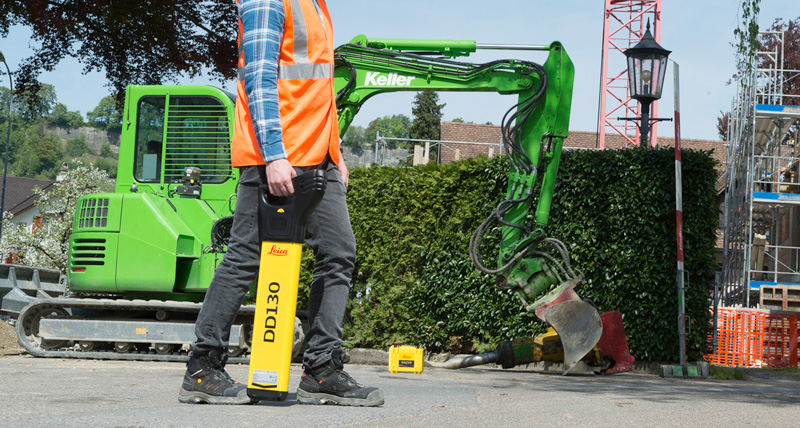
DD120, DD130, DD175 and DT100: what to compare
The DD100 Series is not three identical receivers with different labels. Extra frequencies, signal-current indication and work recording can justify a higher model if they serve the team’s actual tasks. DT100 should be assessed as part of a system with an appropriate transmitter and accessories.
DT100 offers five locating modes: SinglePeak, TwinPeak, Null, Sweep and TwinSweep. These allow the signal view to be selected for the task, while the frequency analyser helps assess interference when choosing an operating frequency. They are tools for assessing a reading, not automatic confirmation of cable identity. Confirm GNSS integration and documentation equipment for the specific configuration; do not assume a surveying receiver is included in every kit.
| Model | An important distinction when choosing | What to check in the offer |
|---|---|---|
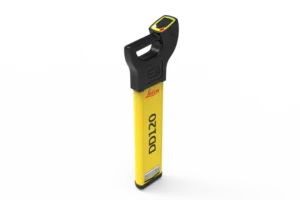
| Leica DD120 | Basic checks; active frequencies of 8 and 33 kHz | Standalone receiver or a kit with a transmitter |
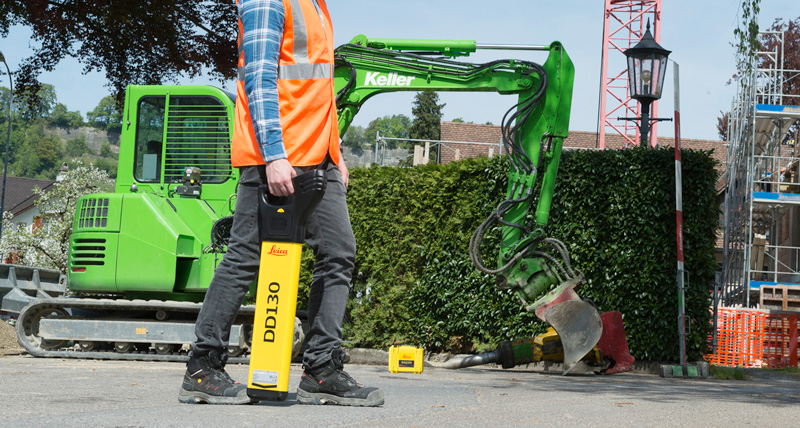
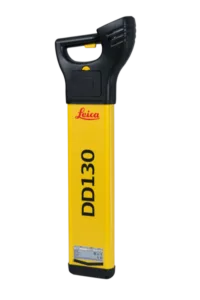
| Leica DD130 | Additional 512 and 640 Hz frequencies and signal-current indication | Compatibility with the sonde or signal source in use |
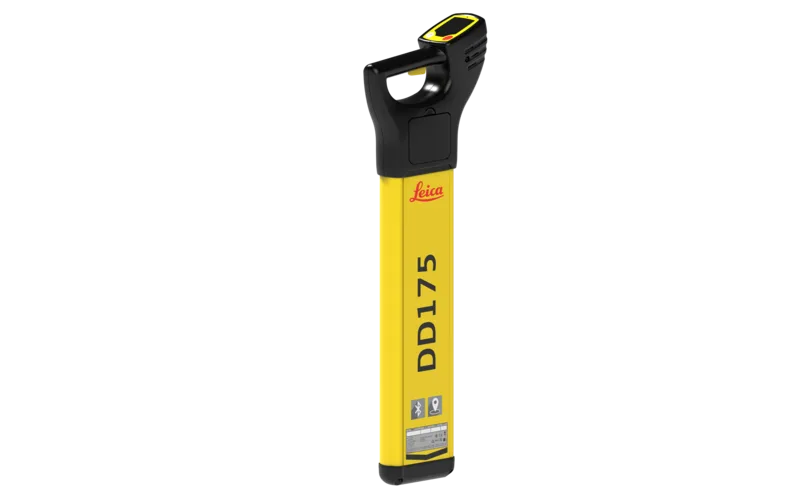
| Leica DD175 | Data logging, GPS and Bluetooth | How recorded information will be used and transferred |
| Leica DT100 | A system for precise tracing with a choice of modes and frequencies | DE100, required accessories, power and documentation workflow |
The transmitter is part of the method
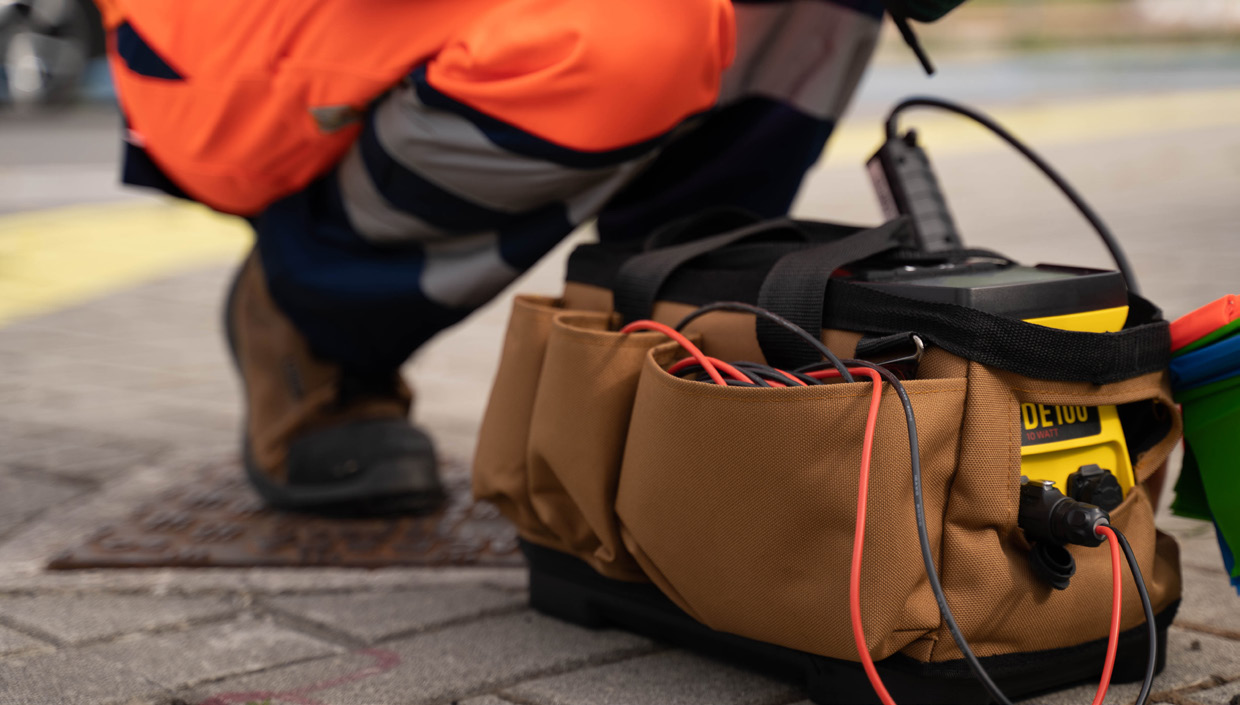
DD100 kits in the shop are paired with DA175, while the DT100 system is paired with DE100. Two devices sharing a brand does not confirm that all their functions are compatible. Common frequencies, suitable leads and accessories, and the signal-application method matter.
Do not judge a transmitter by maximum power alone. Available DE100 power depends on the power source and frequency; choosing Li-Ion does not mean identical output in every mode. Compare signal transmitters and the exact kit contents rather than assuming a kit name includes everything.
Clamps, sondes and tracing rods do different jobs
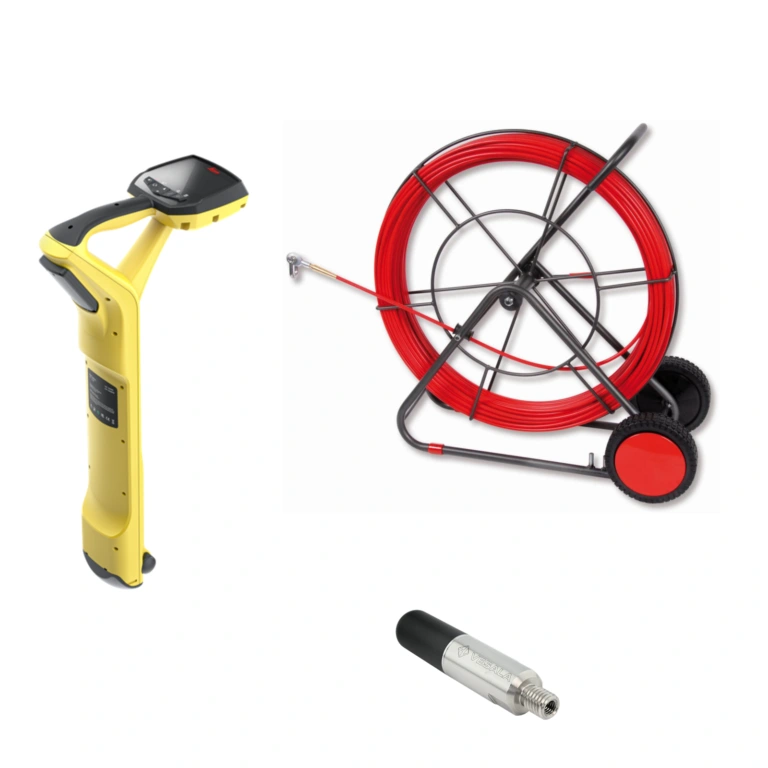
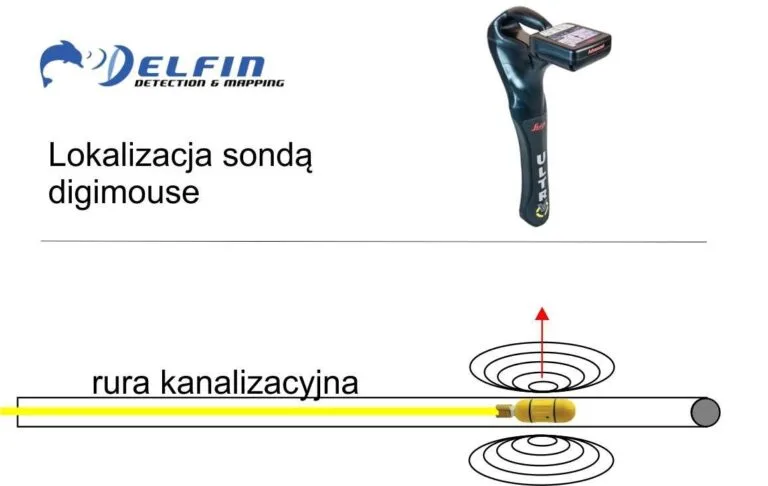
An induction clamp couples a transmitter signal onto a suitable, accessible utility. A sonde is a small transmitter located as a point, for example inside a non-metallic pipe. A tracing rod can enable the inserted route to be followed if its construction and operating modes support signal application.
An ordinary fibreglass rod may simply push a sonde. It should not be credited with the functions of a conductive tracing rod. For sewer work, the separate guide to sondes and fibreglass rods distinguishes these arrangements.
- Match the clamp to the transmitter and utility geometry.
- Check that the receiver supports the sonde frequency.
- Distinguish locating a point from tracing a complete section.
A catalogue depth is not a promise to find a cable
Depth-estimation ranges refer to a particular mode and signal conditions. The DD100 catalogue line-depth range is 0.3–3 m. The 9.99 m figure stated for DD130 and DD175 concerns sonde depth estimation, not universal cable detection at ten metres.
Interference, coupling onto other conductors and utility geometry affect field readings. When buying, ask how uncertain results are recognized and the route checked. A displayed number alone does not replace confirmation of the location using other information.
Compare equipment, power and the complete workflow
When comparing a standalone receiver with a kit, account for the transmitter, leads, bag, battery holders, rechargeable batteries, chargers and any clamp. For example, the basic DT100 + DE100 kit and Li-Ion versions differ in equipment. Charging a rechargeable pack is not the same as charging disposable batteries.
The cost of work also includes preparing staff, maintaining accessories and recording results. If several teams share equipment, plan how a complete kit is handed over and checked. Consult current offer pages for prices and the contents of each supplied variant.
Check the complete work scenario before deciding
Discuss the task using the utility material, surroundings and required documentation. A useful question is “How will this arrangement confirm a particular route and help recognize uncertainty?”, rather than simply “Which model is the most powerful?”. Checking ergonomics and the clarity of operation is also worthwhile.
The team needs to understand the methods’ limitations. Locator training can cover mode selection, transmitters, sondes and interpretation. If electromagnetic pipe tracing is unsuitable, also see the guide to locating water pipes with GPR.
Before choosing equipment
- Which utilities and materials do I survey most often?
- Do I need a transmitter, and is a suitable signal-application method permitted?
- Must I locate sondes, and at which frequency?
- Do I need data recording and positioning?
- Does the offer include the necessary leads, power equipment and bags?
- How will the operator confirm the route and describe uncertain locations?
- Do non-conductive targets also require GPR?
Questions and answers
Is DD120 enough to start with?
It may suit basic checks and tracing at its supported frequencies. Assess whether additional frequencies, signal-current indication or data logging are needed. A standalone receiver does not include transmitter equipment; the scope of work depends on the complete system and operator competence.
What does DD130 add compared with DD120?
DD130 adds 512 and 640 Hz frequencies and signal-current indication. Its higher stated depth range concerns sondes. The catalogue line-depth-estimation range remains 0.3–3 m; it should not be presented as a “3 m versus 10 m” cable comparison.
When is DD175 worth choosing?
When the team will use work recording, GPS and Bluetooth in addition to locating a route. Establish how information will enter the documentation workflow before purchase. Recording a location does not automatically make it a surveying measurement of a specified accuracy.
Is DT100 sold only with a transmitter?
No. Standalone receiver offers and complete kits are available. Select a compatible transmitter and accessories for the intended active method. Also check whether the chosen variant includes a clamp, rechargeable batteries and chargers, or is supplied with battery holders.
Does higher transmitter power always improve locating?
No. Frequency, selective signal application, network geometry and coupling matter. Excessive excitation of the surroundings can make conductors harder to distinguish. Maximum power also depends on mode and supply, so it is not a standalone measure of the complete system’s quality.
Will a locator find a PVC pipe?
Not simply because plastic is present in passive mode. Consider an accessible tracer wire, a sonde inserted into the pipe or GPR, depending on the construction and conditions. The method also depends on pipe access, diameter and available network points.
Does tracing capability imply cable-fault location capability?
No. Route location and fault diagnosis are different tasks. Diagnostic functions require a confirmed configuration, suitable accessories and a procedure. A standard kit containing a transmitter should not be treated as a complete system for every type of cable failure.
Should training be planned before purchase?
Establish who will operate the equipment and what decisions will rely on the readings. Training can be adapted to the owned device and typical utilities. Understanding signal limitations and result checks is as necessary as knowing the controls.
Equipment relevant to this guide
Current prices and exact kit contents are shown in the product offers.
Leica DD120 – standalone locator
1 310 €Net price: 1 065 €
Leica DD130 – standalone locator
1 430 €Net price: 1 163 €
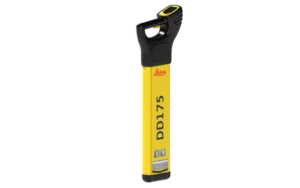
Leica DD175 – locator with data logging
1 670 €Net price: 1 358 €
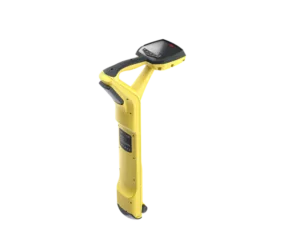
Leica DT100 – standalone locator
4 900 €Net price: 3 984 €
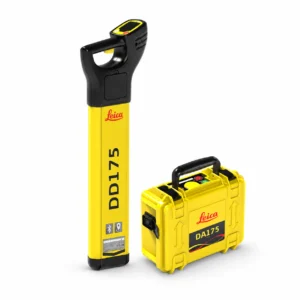
Leica DD175 + DA175 kit with leads and bag
3 100 €Net price: 2 520 €
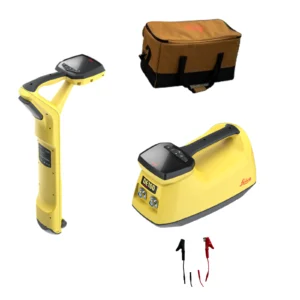
Leica DT100 + DE100 kit with battery holders
8 730 €Net price: 7 098 €
Further reading
- How to choose sewer and drainage tracing equipment: sonde, fibreglass rod or TraceRod
A sonde locates a point, an active rod helps trace a route, and ordinary fibreglass pushes a sonde. Select equipment for pipe access and conditions.